
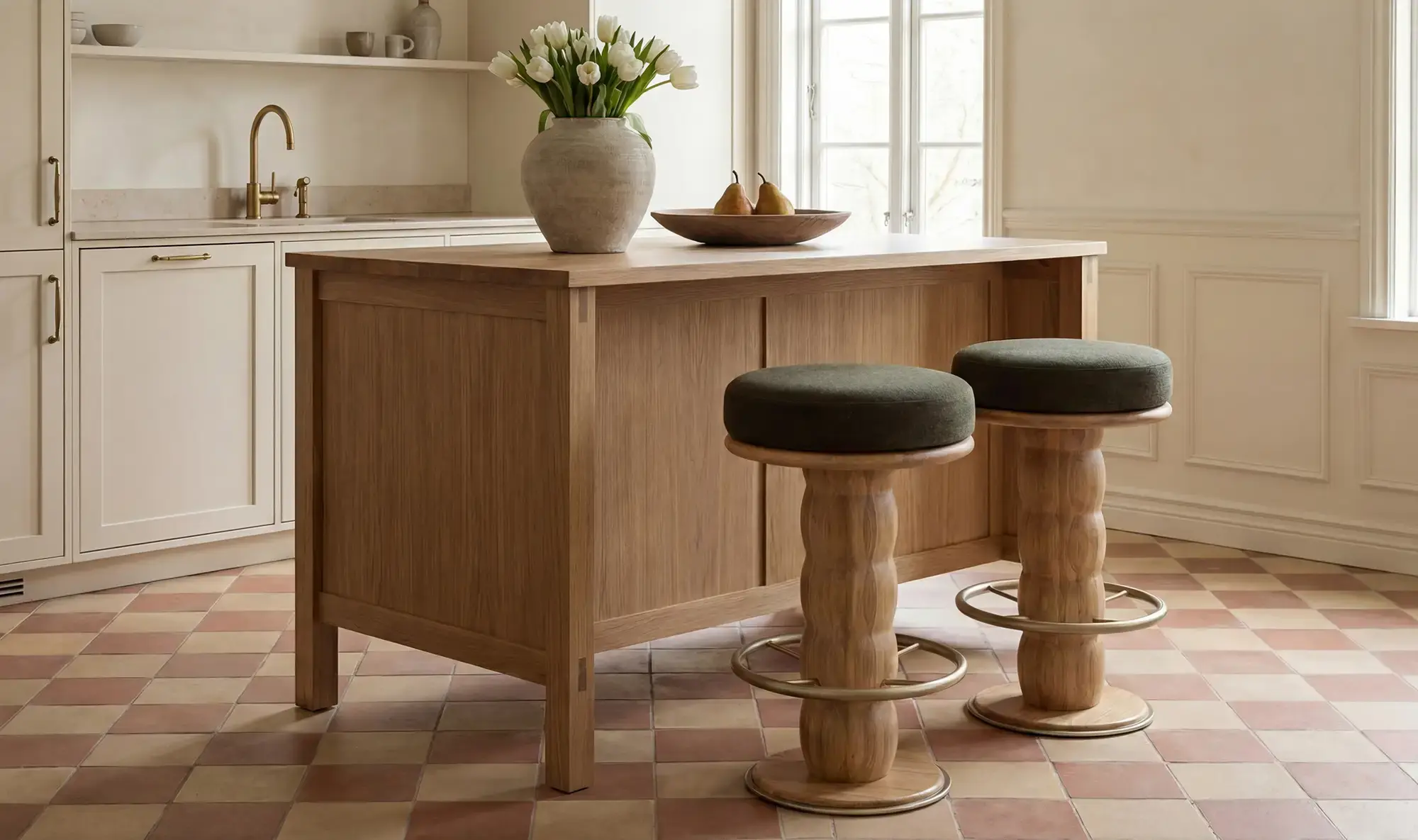
Whether you’re outfitting a kitchen island, a home bar, or a breakfast nook, the right barstools can completely transform the way a space looks and feels.
This post covers everything you need to know about choosing wood barstools, from sizing and style to finish options and long-term durability, so you can make a decision you’ll be happy with for years to come.
Why Barstools Matter More Than You Think
Walk into almost any home in Colorado Springs and chances are there’s a kitchen island, a peninsula counter, or a dedicated bar area that serves as the social hub of the house. It’s where morning coffee happens, where kids do homework, where guests gather during dinner parties. And yet, when it comes time to furnish that space, many homeowners treat barstools as an afterthought, something to grab quickly without much thought.
That’s a mistake. Barstools are among the most used pieces of furniture in a home. They take daily wear and tear, get sat on by kids and adults alike, and are constantly moved, bumped, and rearranged. Choosing the wrong ones, whether the height is off, the material isn’t durable, or the style clashes with the rest of the room, is a frustration you’ll live with every single day.
The good news is that making the right choice isn’t complicated once you understand a few key factors. This guide walks you through everything: height, style, material, finish, and how to find quality wood barstools that will actually last.
Step One: Get the Height Right
Before you even think about style or color, you need to nail the height. Nothing else matters if your barstools don’t fit your counter or bar. Here’s the basic rule of thumb:
Counter-height stools are designed for surfaces that are approximately 36 inches tall, which is the standard height for most kitchen counters and islands. For these surfaces, look for barstools with a seat height of 24 to 26 inches.
Bar-height stools are made for surfaces around 40 to 42 inches tall, which is typical for home bars and some kitchen peninsulas. These stools should have a seat height of 28 to 30 inches.
Extra-tall or spectator-height stools are used for surfaces 44 to 47 inches tall. These are less common in residential settings but are found in some custom home bars and entertainment rooms. Seat heights for these run 33 to 36 inches.
A simple way to double-check: measure your counter or bar height and subtract 9 to 13 inches. That range is your ideal seat height, as it allows for comfortable legroom.
When in doubt, err on the shorter side. It’s easier to sit comfortably on a slightly lower stool than to feel cramped on one that’s too tall.
Step Two: Decide on a Style
Once you have the height sorted, you can start thinking about aesthetics. Barstools come in a wide range of styles, and the best choice depends on the overall design of your space. Here are the most popular categories:
Backless Barstools
Backless stools are clean, minimal, and incredibly practical. They slide under a counter completely, which means they don’t visually clutter the space when not in use. They work well in contemporary, farmhouse, and transitional kitchens. The trade-off is comfort. They’re great for quick meals or casual sitting but less ideal if you plan to sit for extended periods.
Barstools with Backs
Adding a back to a stool significantly increases comfort and support. Styles range from simple ladder backs and spindle backs to more decorative options with carved details or upholstered cushions. In a real wood barstool, the back becomes a design feature in its own right. The grain pattern and natural character of the wood add visual warmth that manufactured or metal alternatives simply can’t replicate.
Swivel Barstools
Swivel barstools add convenience, especially in social settings where people are turning around to talk, reaching for things, or getting up and down frequently. Many solid wood swivel barstools come with an adjustable-height mechanism as well, making them highly versatile.
Saddle Seat Barstools
Named for the slight curve in the seat that resembles a saddle, these are an ergonomic choice that encourages better posture. They’re popular in both modern and rustic settings. In a solid wood version, the carved saddle seat also shows off the quality of the wood beautifully.
Step Three: Choose Your Material Wisely
This is where the decision gets interesting, and where many buyers end up disappointed after going the budget route.
The barstool market is flooded with options made from particleboard, MDF, hollow metal, or materials designed to look like wood but aren’t. These pieces can look fine on a showroom floor or in a product photo. But under daily use, the scraping on tile floors, the rocking back and forth, the moisture from spilled drinks, they tend to break down fast.
Solid wood barstools are a fundamentally different category. Here’s why:
Durability That Compounds Over Time
Real wood is structurally strong in a way that engineered materials aren’t. Hardwoods like oak, maple, cherry, and walnut are dense, resistant to denting, and capable of handling the kind of repeated stress that barstools experience. A well-made solid wood barstool can last decades, not just a few years.
According to the National Association of Home Builders, solid wood furniture, when properly cared for, can outlast most other furniture materials by a significant margin. That longevity translates directly into value over time.
Repairability
One of the most underappreciated advantages of real wood furniture is that it can be repaired. A scratch or ding in a solid wood barstool can be sanded out and refinished. A split joint can be reglued. A worn finish can be stripped and redone. With particleboard or metal, once it’s damaged, it’s often done. You either live with it or replace it.
Aesthetic That Ages Well
Real wood doesn’t go out of style. Whether you have a modern kitchen, a rustic farmhouse aesthetic, a Craftsman home, or a contemporary open floor plan, there’s a wood species and finish that complements it. And as wood ages, it develops character. Subtle changes in color and patina make it look better over time, not worse.
Environmental Considerations
Solid wood furniture from responsibly sourced lumber is a far more sustainable choice than furniture made from synthetic materials or tropical hardwoods harvested without oversight. When you buy real wood from suppliers who know their sources, you’re making a more environmentally responsible purchase.
Step Four: Pick the Right Wood Species
Not all wood is created equal, and the species you choose affects both the look and the longevity of your barstools. Here’s a quick overview of common options:
Oak is one of the most popular hardwoods for furniture. It’s strong, widely available, and has a pronounced grain pattern that many people love. Red oak has warm, reddish tones, while white oak is slightly more subtle and is trending heavily in modern interior design right now.
Maple is denser and harder than oak, with a tighter, more uniform grain. It takes paint and stain exceptionally well and is a great choice if you want a clean, consistent look.
Cherry has a rich, reddish-brown color that deepens beautifully with age. It’s a premium choice that adds warmth and sophistication to any space.
Walnut is one of the most desirable hardwoods in furniture making. Its deep brown color, smooth grain, and natural luster make it a standout. It’s typically on the higher end price-wise, but the visual impact is hard to match.
Pine and other softwoods are more affordable and have a more casual, rustic character. They’re softer, which means they’re more susceptible to denting, but many homeowners love the lived-in look that develops over time.
Step Five: Finished or Unfinished, a Decision That Opens Up Possibilities
Most people assume that furniture comes already finished and that’s that. But there’s another option worth considering: unfinished wood barstools.
Buying unfinished gives you complete control over the final look of your furniture. You choose the stain color, the sheen level, the finish type. Want a light natural finish that lets the grain shine through? Done. Want a deep espresso stain to match your existing cabinets? Possible. Want to paint them a bold color for a pop of personality? Go for it.
Unfinished furniture also lets you see exactly what you’re getting. There’s no finish hiding imperfections or masking the quality of the wood. What you see is genuinely what you get, which means you can trust the quality before committing.
At CO Lumber, we’re one of the only furniture retailers in Colorado that carries unfinished furniture in stock. That means you can come in, see the pieces in person, check the quality of the wood firsthand, and talk with our team about finish options before you make a decision. We can walk you through the process step by step, and if you’d rather leave the finishing to us, our in-house finishers can handle that too.
How Many Barstools Do You Need?
This sounds obvious, but it’s easy to get wrong. A general guideline is to allow 26 to 30 inches of width per stool at the counter. So if your island is 96 inches (8 feet) wide, you could comfortably fit three to four stools depending on their size.
Also consider traffic flow. If one end of your island faces a wall or a corner, make sure there’s still enough clearance to pull the stool out comfortably without bumping into anything.
For a breakfast nook or bar with a wall, you’ll want to be particularly mindful of door swings, drawer pulls, and cabinet openings nearby.
Mixing and Matching: Is It a Good Idea?
In a word: yes, done thoughtfully. Mixing barstool styles, say pairing backless stools with a single stool that has a back at the end of an island, can look intentional and interesting. Mixing materials, like wood stools with a metal base or upholstered seats on a wood frame, is also very on-trend right now.
The key is to maintain some visual consistency. If you’re mixing, try to keep the wood species the same, or tie things together through a consistent color palette or finish tone. The goal is cohesion, not uniformity.
Caring for Your Wood Barstools
Real wood furniture is durable, but it does benefit from basic care. Here are a few tips to keep your barstools looking great:
- Wipe up spills immediately. Wood and prolonged moisture don’t mix well. A quick wipe with a dry or slightly damp cloth goes a long way.
- Use coasters or placemats. If drinks are regularly set on the seats, a coaster prevents ring marks.
- Avoid harsh chemical cleaners. Mild soap and water is all you need for routine cleaning. Harsh chemicals can strip or dull the finish.
- Re-oil or re-wax periodically. If your stools have an oil or wax finish rather than a polyurethane coat, an annual reapplication keeps the wood nourished and protected.
- Check the joints. Over time, with heavy use, joints can loosen. A little wood glue and clamping can fix this quickly and extend the life of the stool significantly.
Come See Our Wood Barstools in Person
There’s only so much you can learn from a product listing online. Seeing a barstool in person, touching the wood, checking the joinery, and evaluating the grain in real light, tells you far more about quality than any photo can.
At CO Lumber & Real Wood Furniture, we carry a wide selection of solid wood furniture in our Colorado Springs showroom, including both finished and unfinished options. Our team can help you work through the details: which wood species fits your aesthetic, what stain or finish will complement your existing kitchen, and whether a custom height or configuration makes sense for your space.
For buyers who need something specific that isn’t on the showroom floor, our custom woodworking shop can build it. This is especially useful with barstools, where getting the seat height exactly right for your counter can make a meaningful difference in everyday comfort.
We’re located at 3636 N. Stone Ave in Colorado Springs and open Monday through Friday from 8:00 AM to 5:30 PM, and Saturday from 9:00 AM to 5:00 PM. Give us a call at (719) 389-0100 or stop in and our team will be happy to help you find the right fit.
The Bottom Line
Choosing the right barstools is a more considered decision than most people give it credit for. Height, style, material, and finish all play a role, and making smart choices in each category means the difference between furniture you tolerate and furniture you genuinely love.
Solid wood barstools, whether finished or unfinished, offer durability, repairability, and aesthetic staying power that manufactured alternatives can’t match. They’re an investment in the look and function of one of the most-used spaces in your home.
Take the time to get the height right, choose a wood species that suits your aesthetic and budget, and think carefully about finish options. If you have the opportunity to see pieces in person before buying, take it.
We’d love to help you find exactly what you’re looking for. Stop into our Colorado Springs showroom or reach out online and let’s get started.