
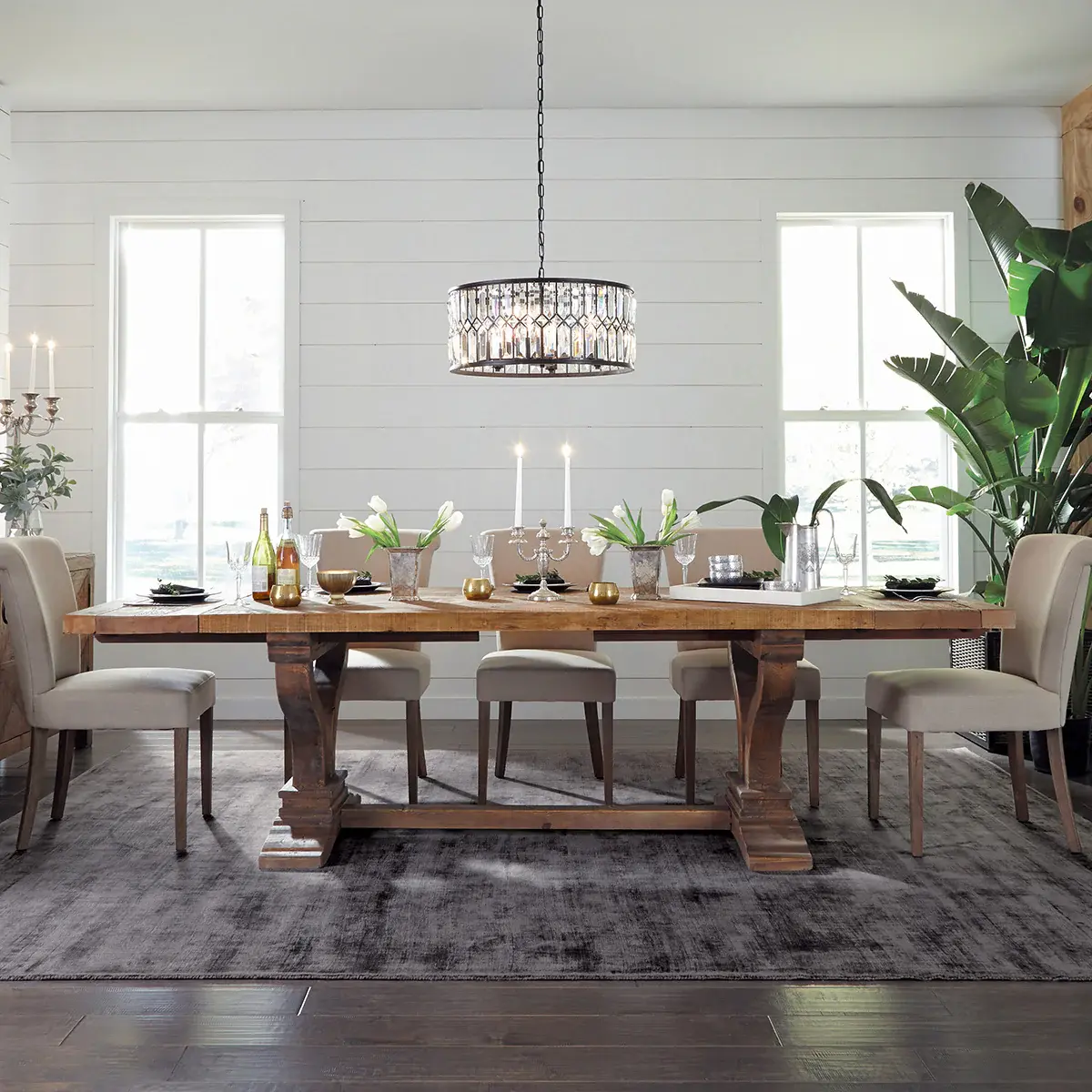
The wood dining table is more than just a piece of furniture, it is the cornerstone of the home. It is where life happens: daily meals, holiday feasts, late-night conversations, and family projects. Unlike trends that fade, a well-chosen wood dining table possesses a timeless quality—a beautiful blend of nature’s artistry and human craftsmanship.
For those in the Colorado Springs area and beyond, understanding the anatomy of a truly durable, high-quality wood dining table is the first step toward making a generational investment. Here at CO Lumber & Real Wood Furniture, we specialize not only in providing exceptional finished and unfinished wood furniture, including handcrafted Amish and stunning live edge pieces, but also in the premium lumber that makes these tables last.
This post is designed to cover every detail necessary for selecting the perfect wood dining table, from analyzing the specific wood species and construction techniques to finding the ideal style and size for your space.
The Unbeatable Appeal of Wood
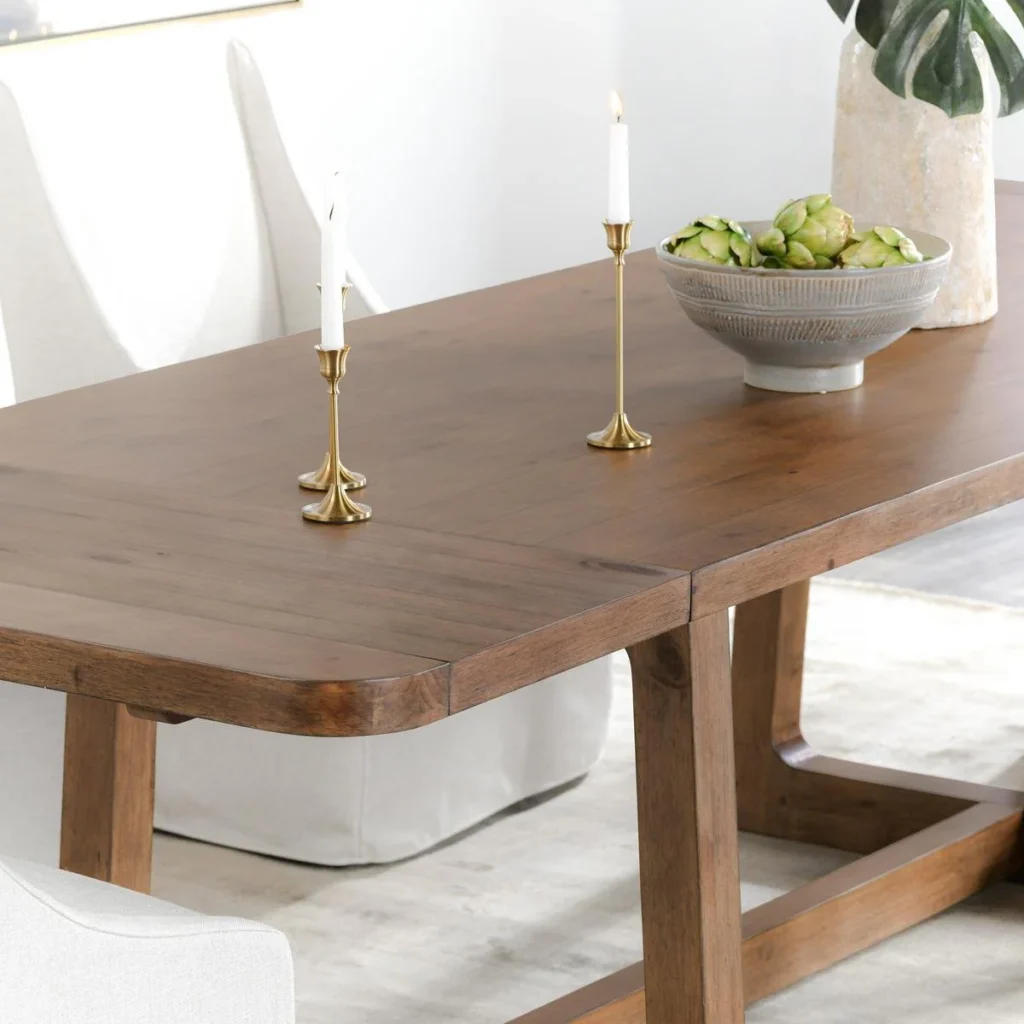
In a market saturated with veneers, composites, and engineered wood, why does the solid wood dining table consistently remain the gold standard?
The answer lies in its unique combination of durability, aesthetics, and history.
- Durability and Longevity: Solid wood can be refinished, repaired, and even repurposed countless times. A minor scratch or dent is not a disaster; it’s a story, easily sanded away or polished out. This resilience is why heirloom tables often remain in families for generations.
- Aesthetic Depth: Every wood dining table is inherently unique. Factors like the age of the tree, the way it was milled (e.g., quarter-sawn vs. plain-sawn), and the finishing process ensure that no two tables are exactly alike. The grain patterns, knots, and color variations which are especially evident in natural and live edge slabs offer unparalleled warmth and character that synthetic materials simply cannot replicate.
- Tangible Value: Choosing a table crafted from genuine, solid hardwood is an investment that maintains its value better than mass-produced furniture. It is a commitment to quality craftsmanship.
The Foundation of Quality: Understanding Wood Types and Durability
The first and most critical step in choosing a wood dining table is understanding the material itself. Not all wood is created equal, and the species you select directly impacts the table’s resistance to dents, scratches, and the environmental factors common in Colorado. We categorize wood into two main groups: hardwoods and softwoods. For a piece intended to last generations, hardwoods are the unequivocal choice.
Hardwoods vs. Softwoods: A Durability Comparison
| Wood Type | Characteristics | Janka Hardness (Approx.) | Ideal Use for Dining Tables |
|---|---|---|---|
| Hardwoods | Dense, durable, long-lasting, excellent resistance to wear. | 1,000+ | Primary choice for daily-use dining tables. |
| Softwoods | Less dense, prone to denting and scratching, more affordable. | Under 1,000 | Best suited for decorative pieces or furniture with minimal contact. |
A Deep Dive into Wood Species (The Heart of the Table)
The choice of wood species fundamentally determines a table’s look, feel, and long-term durability. To ensure your table can withstand the rigors of daily life, you must understand its inherent properties. The industry standard for measuring hardness and durability is the Janka Hardness Scale, which measures the force required to embed a small steel ball halfway into a piece of wood.
Here is a look at the most popular and durable hardwoods available today.
The North American Classics
White Oak (Janka: ~1,350 lbf): Highly prized for its durability, resistance to warping, and distinct, pronounced grain. It’s an incredibly versatile wood, featured heavily in traditional, rustic Farmhouse, and Arts and Crafts styles. White Oak takes stains and natural finishes beautifully, making it a reliable workhorse.
Hard Maple (Janka: ~1,450 lbf): One of the hardest domestic woods. Maple features a fine, uniform, and often subtle grain pattern. Its pale, light color makes it a favorite for contemporary and minimalist designs. Maple is excellent for heavily used surfaces due to its resistance to scratching and denting.
Black Walnut (Janka: ~1,010 lbf): Though slightly softer than Oak or Maple, Walnut is perhaps the most luxurious domestic wood. It boasts a rich, deep brown hue, often with purple or red undertones, and a sweeping, elegant grain. It is the definitive wood for Mid-Century Modern and high-end contemporary dining tables.
Cherry (Janka: ~995 lbf): Known for its smooth, fine grain and ability to develop a beautiful patina over time, maturing from a pale pink to a deep, rich reddish-brown. Cherry is the classic choice for formal and traditional furniture.
Exotic & Reclaimed Species (Adding Unique Character)
Acacia/Sheesham (Janka: ~1,700–1,800 lbf): These woods are incredibly hard and are often characterized by bold, contrasting grain patterns and multiple color tones within a single slab. They are frequently used in Industrial, Rustic, and Coastal furniture styles.
Teak (Janka: ~1,000–1,150 lbf): Renowned for its natural resistance to moisture and insects due to high oil content. While often used for outdoor furniture, Teak also brings a relaxed, coastal, or colonial feel to indoor dining spaces.
Mango & Parota (Janka: Lower to Mid-Range): These woods are noted for their striking, varied grain and sustainability. They are often used for rustic or eclectic pieces where character and color variation are desired.
Reclaimed Wood (Varies Widely): Sourced from old barns, factories, or structural beams (often referred to as “Old Lumber”), reclaimed wood is highly stable and extremely durable, boasting a rich history and unique distress marks that define the rustic and vintage style.
| Wood Type | Janka Hardness (lbf) | Key Characteristics | Style Suitability |
|---|---|---|---|
| Hard Maple | ~1,450 | Very hard, fine and uniform grain, highly resistant to dents. | Modern, Contemporary, Transitional |
| White Oak | ~1,350 | Extremely durable, prominent grain, warp-resistant. | Traditional, Rustic, Farmhouse, Craftsman |
| Acacia / Sheesham | ~1,700–1,800 | Very dense, often multi-toned, dramatic grain patterns. | Industrial, Exotic, Rustic |
| Black Walnut | ~1,010 | Rich, deep brown color, elegant sweeping grain, luxurious appeal. | Mid-Century Modern, High-End Contemporary |
| Cherry | ~995 | Smooth, fine grain, develops a rich patina over time. | Traditional, Formal, Shaker |
| Teak | ~1,000–1,150 | High oil content, naturally moisture- and pest-resistant. | Coastal, Outdoor, Colonial |
The Elements of Quality Construction
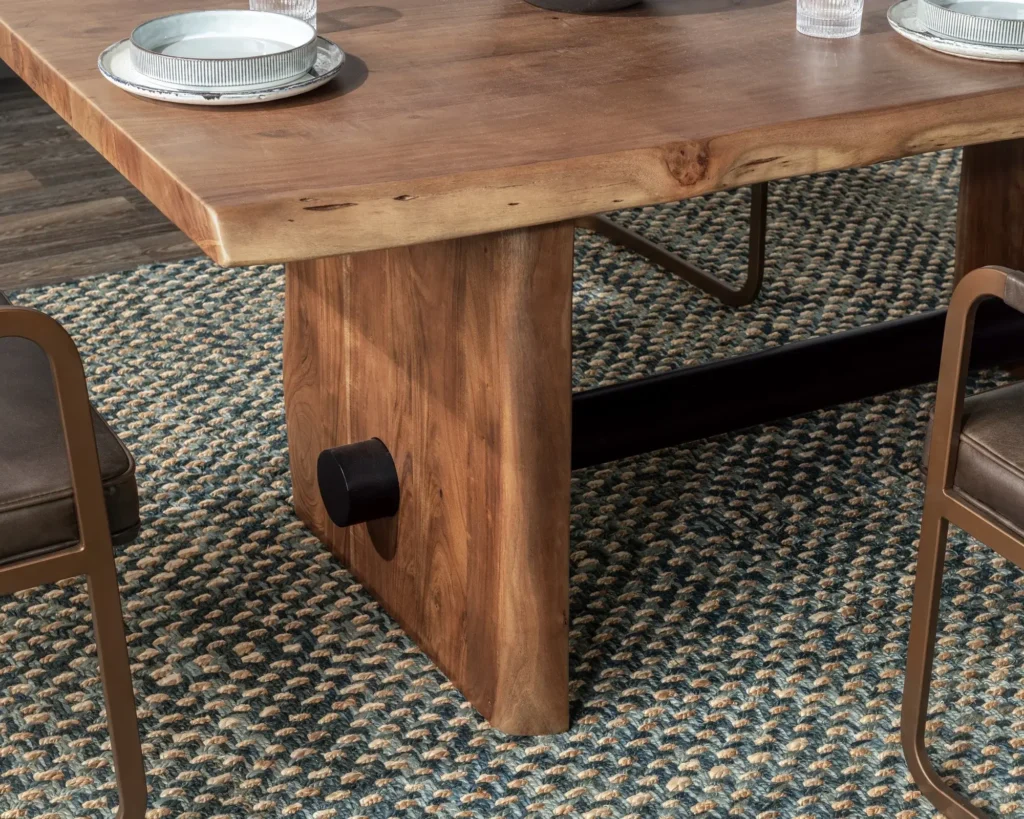
A “wood table” can mean many things, from particleboard with a veneer to solid wood. At the end of the day, a beautiful piece of wood is only as good as the table’s construction.
When investing in a wood dining table, knowing these four key construction markers will separate a disposable piece from a durable heirloom.
1. Solid Wood vs. Engineered Wood
This is arguably the most important distinction.
- Solid Wood: The entire table surface and structural elements are constructed from single, continuous pieces or laminated boards of the specified wood species. It is heavy, stable, and can be repaired indefinitely.
- Veneer/Engineered Wood (Particleboard/MDF with a Wood Layer): These tables are lightweight and inexpensive but cannot be sanded or refinished without ruining the surface. While some high-quality veneers are stable, they lack the true longevity and deep character of solid wood.
As a leading furniture store in Colorado Springs, the real wood tables that we carry meet the highest standards of structural integrity, prioritizing durability and lasting value over fleeting trends. This is particularly important in the dry Colorado climate, where engineered materials can warp or delaminate more easily than properly dried and finished solid wood.
Joinery Techniques
Look beyond glues and nails. High-quality wood dining tables use traditional, interlocking joinery that allows the wood to naturally expand and contract with humidity changes without coming apart.
- Mortise and Tenon: A classic joint where one piece (the tenon) fits tightly into a corresponding slot (the mortise). This is a hallmark of furniture designed for longevity, especially in legs and stretchers.
- Dovetail: Often seen in drawers but sometimes used in table aprons, this interlocking joint offers incredible tensile strength.
- Trestle Bases: A popular design (often seen in Farmhouse styles) where two solid end supports (trestles) are connected by a central beam. Trestle tables offer unparalleled stability and often allow for greater seating flexibility since there are no corner legs.
3. Base Design and Structural Aesthetics
The base design dictates both stability and how many chairs can comfortably fit.
- Legged (Apron and Legs): The traditional four-legged design. Stable but can limit end-of-table seating.
- Pedestal: A central column or cluster of columns supporting the top. Ideal for maximizing seating around a round or square table, as there are no corner obstructions.
- Trestle: Excellent stability, visually grounding, and comfortable for seating as the supports are generally set back from the edges.
4. Finishes: Oil vs. Lacquer
The finish protects the wood and determines its look and feel.
- Natural Oil Finishes (e.g., Tung or Linseed Oil): These soak into the wood, highlighting the natural grain and providing a soft, matte, easy-to-repair surface. This finish is perfect for a truly authentic, tactile experience, often preferred for live edge or rustic tables.
- Polyurethane or Lacquer Finishes: These create a hard, durable, water-resistant barrier on the surface. They offer maximum protection against spills but can crack or chip over time.
Style, Shape, and Size: Fitting the Table to Your Life
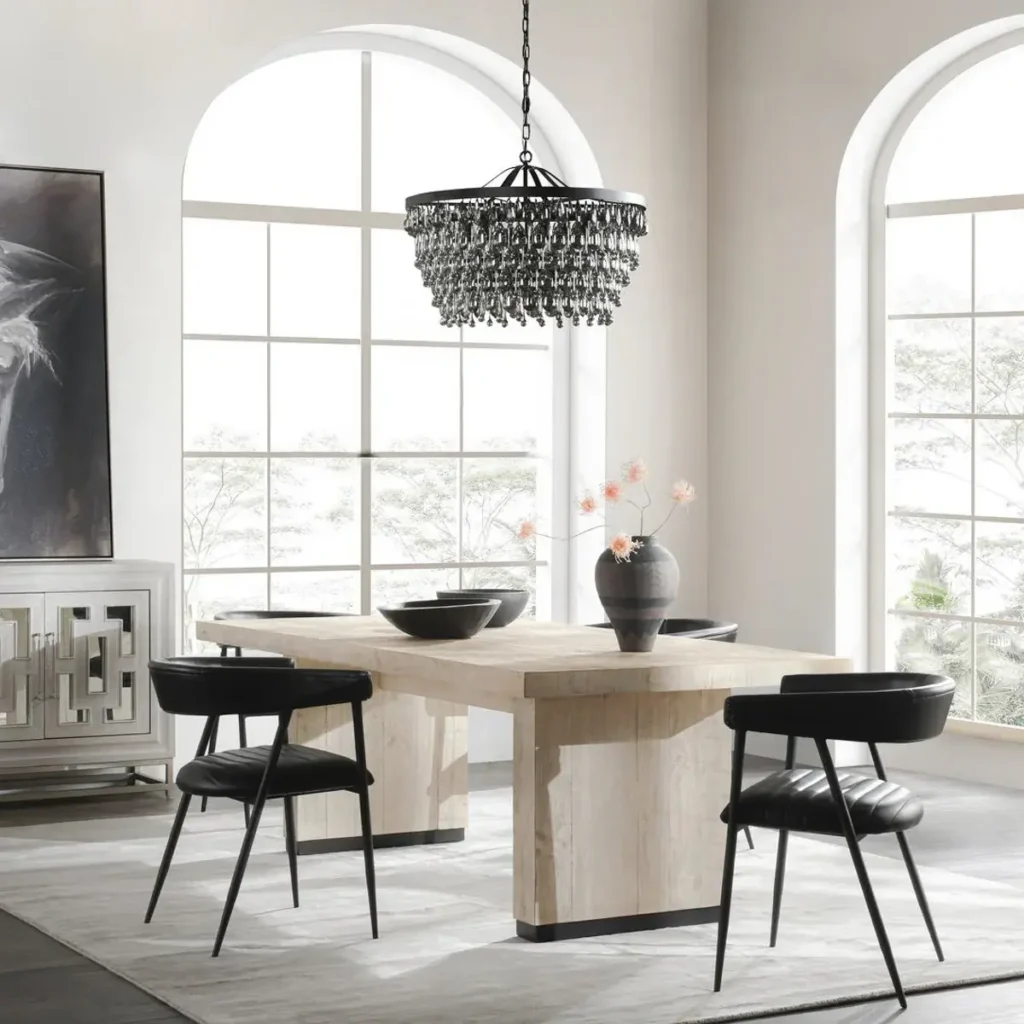
Choosing the right wood dining table also means matching its physical attributes to your home’s architecture and lifestyle.
Shapes and Seating Dynamics
- Rectangular: The most common shape, offering maximum seating capacity. Perfect for long, narrow rooms. Rectangular tables often include extension mechanisms (leaves) for versatility.
- Round: Ideal for small or square dining spaces. The absence of corners promotes conversation and flow, creating an intimate setting. Round tables, especially those with pedestal bases, are space-efficient.
- Oval: Offers the seating capacity of a rectangle with the gentle, flowing aesthetics of a round table. Excellent for rooms that feel too angular or small for a full rectangular table.
- Square: Best for small, square rooms, often seating four comfortably. Some square tables include leaves to expand into a large rectangle.
Mastering Interior Style
Your wood dining table should harmonize with your existing decor. A few timeliness styles include:
- Farmhouse / Rustic: Defined by distressed finishes, heavy proportions, and often reclaimed wood or Oak. Look for Trestle or thick-legged designs.
- Mid-Century Modern (MCM): Characterized by clean lines, tapered legs, and darker woods like Walnut or Teak. Round and oval shapes are common, often featuring subtle curves and functional extensions.
- Industrial Loft: Combines heavy, solid wood slabs (like Sheesham or Oak) with industrial materials, such as iron or steel bases. Often features raw or natural finishes.
- Live Edge / Artisan: A celebration of the wood itself. The table top features the natural, untrimmed edge of the tree slab, often Chamcha or large Walnut or Oak slabs. This style is a unique statement piece.
Dining Table Dimensions and Seating Capacity
Sizing is of course really important. You’ll want to ensure you have at least 3 feet (36 inches) of clearance between the table edge and the wall or any other furniture to allow diners to push their chairs back comfortably.
| Shape | Dimensions (Approx.) | Seating Capacity | Ideal Room Size / Usage |
|---|---|---|---|
| Rectangle | 60″ x 36″ (5ft) | 4 – 6 | Small Families, Apartments, Versatile |
| Rectangle | 80″ x 40″ (6.7ft) | 6 – 8 | Standard Dining Rooms, Regular Entertaining |
| Rectangle | 108″ x 42″ (9ft) | 8 – 10 | Large Gatherings, Formal Dining Spaces |
| Round | 48″ Diameter | 4 – 5 | Small Spaces, Breakfast Nooks, Intimate Settings |
| Round | 60″ Diameter | 6 – 7 | Open Layouts, Balanced Aesthetics, Conversation |
| Square | 40″ x 40″ | 4 | Small Nooks, Casual Dining for Four |
The Versatility of Extension Tables
Extendable dining tables are a high-demand feature, especially here in Colorado. If you frequently host large groups but need to conserve space day-to-day, an extension table is really helpful.
- Self-Storing Leaves: The most convenient type, where the leaves fold and store neatly within the table itself.
- Drop-in Leaves: Requires manual insertion into the table ends or center, often requiring external storage when not in use.
- Butterfly Leaves: A type of self-storing leaf that folds in half like a butterfly’s wings and tucks under the table surface. This is a common and user-friendly mechanism in high-quality Amish furniture.
Care and Maintenance for Lifelong Beauty
A solid wood dining table requires only modest care to last a lifetime. Proper maintenance is important, regardless of whether you choose a high-end finished piece or a custom, oil-finished slab.
- Humidity Control: Wood is hygroscopic, meaning it absorbs and releases moisture based on the environment. In dry climates like we have here in Colorado Springs, using a humidifier is highly recommended, especially in winter. Stable humidity (ideally between 40% and 55%) prevents warping, splitting, and cracking.
- Cleaning: Use mild soap and water or a specialized wood cleaner. Avoid harsh chemical cleaners, abrasive pads, or silicone-based polishes, as these can break down the protective finish over time.
- Protection: Use coasters, placemats, and hot pads diligently. While wood is durable, prolonged exposure to heat or moisture can damage the finish.
- Refinishing: If your table is oil-finished, reapplying oil every 6–12 months is usually necessary to refresh the protection. If it is lacquered or varnished, light scuffs can often be buffed out, while serious damage may require a professional sanding and full refinish—a job only possible with solid wood.
Investing in Your Legacy
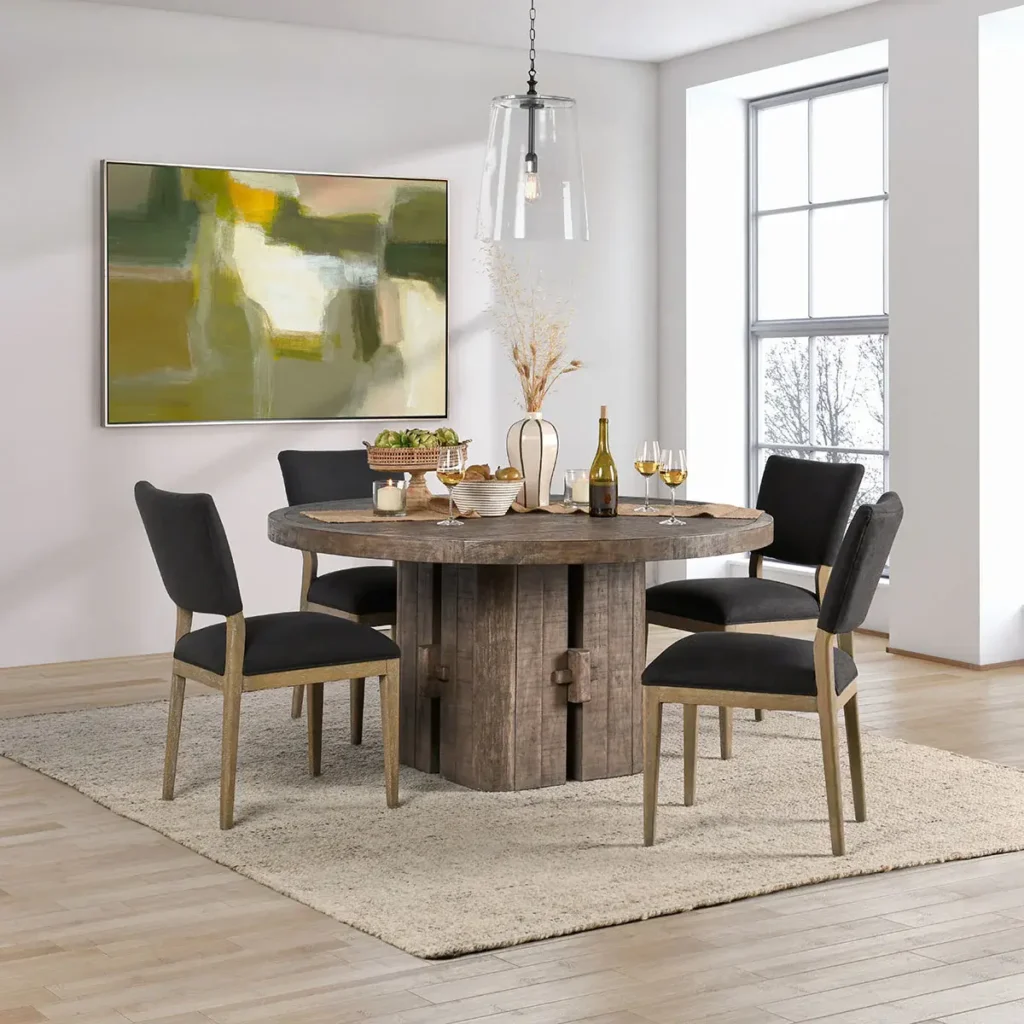
The journey to finding the perfect wood dining table is one of understanding material quality, appreciating craftsmanship, and selecting a design that speaks to your personal aesthetic. The top-ranking tables on the market today—be they extendable, reclaimed, or high-style artisan pieces—all share the common thread of being built from superior, solid wood.
By focusing on durable species like Oak, Maple, and Walnut, demanding quality construction like dovetails and trestle bases, and choosing a style that truly complements your home (from Farmhouse to Mid-Century Modern), you ensure your investment is sound.
Whether you are looking for a beautiful, finished Amish table, an awe-inspiring Live Edge slab, or the perfect raw lumber to build your own masterpiece, CO Lumber & Real Wood Furniture is your local resource.
We invite you to visit our Colorado Springs showroom to start the process of choosing the functional, beautiful, and lasting wood dining table that your family will gather around for generations to come.